Wednesday, January 24, 2007

Thursday Thirteen: Circular Discussion

While I was rummaging around looking at old (paper) files, I found a folder of things I wrote down about my children when they were little. Kids say some funny things as they are learning to use logic, and if you listen in on their conversations, you may be entertained. When my kids were about 9 (L), 7 (B), and 5 (M), they had this circular discussion in a busy restaurant during a family vacation somewhere in the Wild West.

The previous entry is another one of their circular discussions.

M: What’s the matter with that man?

B: Did you hear what he said?

L: What?

B: He said a criminal escaped from a prison.

M: What?

B: He said a criminal escaped from a prison.

M: Who said?

B: That man.

M: What did he do?

B: He didn’t do anything. He said something.

L: Who? The man? He means the criminal, B.

B: I don’t know. How am I supposed to know?

M: I don’t know. You said it.

Thursday, January 18, 2007

Thursday Thirteen: "American Idol"

I’m not a big watcher of “American Idol,” but I have some observations of it based on three or four viewings and what I’ve seen in the news lately.

Apparently, the panel of “judges” screen thousands of idol hopefuls.

They are charged with choosing the final thirty or so contestants, who will be picked off one at a time during the season.

Many of the people auditioning have little to no talent.

The judges roll their eyes and make rude remarks to the ones they don’t like.

In fact, some of the things they say are downright cruel and hurtful.

For example, on the news I saw What’s-His-Name (meanest judge) say to one young man that he had weird eyes and did not either sound or look human. He said, "You look like one of those creatures that live in the woods with those massive eyes."

I was horrified that anybody would be that mean and personal. Why couldn’t he just say thanks, but no thanks?

I think the whole thing is somewhat rigged from the very beginning.

A couple of years ago, I asked my students to write a little piece about the appeal of “reality” shows. My example was “Survivor.”

One student said he thought viewers identify with real people more than actors. Maybe this season’s opening “American Idol” segment had more viewers than ever for that reason.

One student used “American Idol” as a reference. She said, “We have a responsibility to choose our music.”

Oh, good grief!

Wednesday, December 20, 2006

Thursday Thirteen: Anne Rice--Christ the Lord: Out of Egypt

I just finished reading Anne Rice’s latest book, Christ the Lord: Out of Egypt. Here are thirteen things I’d like to say now.

1. Anne Rice used to write exclusively about vampires and such things as demons and devils.

2. I can’t write with knowledge about those earlier books because I’ve never read any of them. I have been aware of her reputation as a “vampire” writer, and I have avoided those books on purpose. But I have plenty to say about Christ the Lord: Out of Egypt.

3. It was a little ironic to read the list of books written “also by Anne Rice”—things like Interview with the Vampire, The Vampire Lestat, The Queen of the Damned, The Mummy . . . –and then to consider this title, Christ the Lord: Out of Egypt . I have to admit that I was a little skeptical about it.

4. This is an amazing book. It is a first-person narrative about Jesus, as the title says. It covers about a year in his life as a child, when his large family comes back to Nazareth to live after being in Egypt for the first seven years of his life.

5. In the “Introduction to the Paperback Edition,” Rice says, in part, that her story assumes that God “became human in the person of Jesus Christ and ‘dwelt among us.’ The magnificent mystery of the Incarnation is accepted and affirmed as fact.”

6. She says in the introduction that she used scripture to re-create the “emotions and powers of the Child Jesus.” In the author’s notes at the end of the book, she says that for a number of the incidents in the book, she used legends as set forth in the Apocrypha, stories and visions familiar to people for centuries.

7. The story seems very realistic as it presents the mind of the young Jesus. In the story, he is puzzled because he has miraculous powers—for example, the power to make living birds from clay, to heal sick people, to stop rain. He tries not to do these things, in obedience to Joseph and Mary, who discourage such acts. They don’t want to explain any of his beginnings to him until he is old enough to understand

8. We really have no early record in the Gospels of what Jesus was like as a child. I have wondered if he knew all along who he was or if he became aware of it gradually, and how that might have happened. To me, Rice’s interpretation makes sense; I believe that Jesus’ childhood could have been the way she portrays it. Some people would worry that her presentation of Jesus might be blasphemous, but she does it in a humble, loving, spiritual way.

9. The book won Beliefnet’s award for Best Spiritual Book of the Year—2005.

10. Just as amazing as the story itself is Rice’s story in the author’s notes of how she came back to faith. She grew up in the Catholic Church but she fell away from belief at the age of eighteen. She and her husband Stan Rice were avowed atheists for about thirty years.

11. She wrote that her first novel was a reflection of her misery and guilt “in being cut off from God and from salvation; . . . being lost in a world without light” (323). She said, “After that, I wrote many novels without my being aware that they reflected my quest for meaning in a world without God” (323).

12. She read countless scholarly books in preparation for writing about the life of Jesus, including both skeptical and faith-based approaches to the New Testament, history, and philosophy. She read a number of works by N. T. Wright; she said “. . .his generosity in embracing the skeptics and commenting on their arguments is an inspiration. His faith is immense, and his knowledge vast” (335).

13. She fell in love with Jesus. She said she offers this book to Christians of all persuasions “in the hope that my embrace of more conservative doctrines will have some coherence for them in the here and now of the book” (337). She offers it “to scholars in the hope that they will perhaps enjoy seeing the evidence of the research that’s gone into it . . .” (338). She hopes that people who don’t know Jesus Christ “will see him in some form” in the book. And finally, she offers it to her faithful readers “in the hope that Jesus will be as real to you as any other character I’ve ever launched into the world we share” because in truth, Jesus is “the ultimate supernatural hero” (338).

Rice said in a Christianity Today interview: "This book means more to me than anything I've ever done. I'm not offering agnostic explanations. He is real. He worked miracles. He is the Son of God! And there is so much more to write."

It’s a wonderful story—read it! Here’s a link to her web site.

Wednesday, December 13, 2006

Thursday Thirteen: Thoughts after a Suicide


A young man committed suicide last weekend. He was a freshman student at our community college, a football player. I didn’t know him. Two of my good friends taught him in their classes. They say he appeared reasonably happy—maybe a little quiet. He came to class and did his schoolwork.

Other students liked him. One said to me, “He was crazy.”
Another told me, “It was a permanent solution to a temporary problem.”

It is too late now to talk to my students about it because the semester is over. But I would like to tell them some things, if I could. Maybe I'll tell the new ones next semester.

No matter what his reasons were, his death is tragic—a tragic waste. His family and all the other people who knew him must feel very upset about his death and guilty about not being able, ultimately, to help him.

No problem is ever worth committing suicide—nothing.

If at any time someone tells you he is thinking about killing himself, believe it. Know that this person is crying out for help, even if he appears to be kidding.

Take it seriously. An actual suicide attempt is a desperate cry for help.

Don’t just try to talk her out of it. She may agree with you and even promise not to hurt herself. But remember that suicidal people are unstable. She may mean to keep the promise—and then fall apart and shoot herself that very night. Therefore, tell somebody who can do something about it; don’t keep it a secret.

If you begin to feel depressed, overwhelmed, and unable to function, talk to someone you trust—a teacher, a parent, a good friend, a pastor. Don’t put it off.

Try to remember that whatever bad situation you are in, it isn’t the end of things. Time brings change. You won’t always feel this way.

God is the great healer of your heart. He wants to hear from you a heartfelt cry for help. The Bible says, “He heals the brokenhearted, and binds up their wounds” (Psalm 147:3). And Jesus said, “Blessed are those who mourn, for they will be comforted” (Matthew 5:4).

A good thing from the Bible to memorize is this: “He is before all things, and in him all things hold together” (Colossians 1:17). That means God created everything, including me; the things of the world are chaotic, but “in him,” I can make it through the chaos.

How does that happen? If I know him and go to him often and love him, my heart will know a deep, sweet peace, no matter what terrible problems may come my way. Jesus said, “Peace I leave with you; my peace I give you. I do not give to you as the world gives. Do not let your hearts be troubled and do not be afraid” (John 14:27).


Wednesday, December 06, 2006

Thursday Thirteen Thoughts about the First Snowfall

Snow doesn’t happen very often down here in the Southwest. We see snow two or three times during the winter, and it usually starts right after Christmas. It is early this year; our first snowfall was last night when the huge cold front moved in on us.

I’ve noticed that people speak differently about snow, depending on where they live. When we Southwesterners speak of this event, we say “the first snow was early this year.” We know it won’t stay long, and it may or may not happen again this year. My son who lives in the Frozen North has adopted the habit, like other Frozen-Northerners, of saying he hopes to get something done, like bringing in the firewood to the basement, “before the snow flies.”

Thirteen thoughts about snow, whether it “falls” or “flies”:

1. First, it rained hard yesterday for about an hour and a half—a good ol’-fashioned, all-out thunderstorm. (But, actually, I wrote this last Thursday.)

2. Thank you, Lord! It has been very dry for several months, and our trees and bushes will be more protected against the freezing weather. Also, people here are still nervous about fires, after what happened last year—an unusual number of huge brushfires that destroyed many crops and homes.

3. All day, in anticipation of the cold, I had been trying to water my mother’s yard as much as possible. I couldn’t get back to her house to turn off the water before the rain began, so three sprinklers were going full blast in the rain. I got pretty wet slogging around the house to turn them off. And I feared being struck by lightening, with my metal-handled umbrella in my hand! It was crashing all around.

4. During the night, a couple of inches of snow fell, and it has continued snowing most of the day—big, fluffy flakes. School was called off, so I am staying home. (Yea!)

5. Sometimes I can’t tell if it is still snowing because clouds of snow blow off the roof.

6. The ground is still very warm, so it melts slowly, underneath. The roads are passable. But toward the end of the day, ice will form, making driving dangerous. It is a good thing schools are cancelled, because people here in the Southwest don’t know how to drive on ice and snow—even in rain, in some places.

7. Our 6-year-old grandson, who has gotten very good at reading lately, called last night and read us the weather report for the week, here and in the Frozen North where his uncle and aunt live. He likes to keep an eye on the weather for everybody.

8. Little bits of green grass poke up here and there in the snow; soon they’ll turn brown.

9. Bright red cardinals and their tan ladies show up to eat the cat food and to scratch around in the snow under the trees and bushes. A red cardinal in the snow reminds me of a Christmas card we got last year.

10. Blue birds with orange breasts forage, along with the cardinals. Maybe these are migratory birds; I don’t know what kind they are, although I have seen them before. I have a bird book, but right now, I am too lazy to open it. Next time I go out, I must buy some sunflower seeds and put out the bird feeder.

11. I remember that when I was four years old, my father helped me build a snowman for the first time. We used a wooden Coke box as a base, to make him taller. I chattered away like a happy little bird; he didn’t say much, but he smiled a lot.

12. When my daughter was about three, she and I built a snowman. We put a toboggan and a heavy scarf on him, to keep him warm. She loved it. Her little button nose and chubby cheeks were red with the cold, and her dark eyes sparkled. When her brothers came along, we all built snowmen every year.

13. A few years after my father died, my mother and her next-door neighbor built a huge snow-woman. She had big bosoms, a wide-brimmed hat, an apron, and a shawl.

Wednesday, November 29, 2006

Thursday Thirteen--Smells

Our ability to smell is amazing, if you think about it. God created us with a complicated system of nerves, including the olfactory nerves, which are “the first pair of cranial nerves that arise in the mucous membranes within the upper part of the nose and transmit impulses concerned with the sense of smell to the forebrain” (Webster)! In a less technical sense, odors and fragrances can bring us many pleasant sensations and even trigger memories.

Here are thirteen of the most delightful smells I can think of:

1. lilacs—When I was a child, I spent a lot of time playing under a huge lilac bush, and I have always loved the fragrance of the blooms.

2. gardenias—My father bought my mother a corsage of gardenias when they got married; my brother and I bought a big bouquet of gardenias for our parents’ fiftieth wedding celebration.

3. honeysuckle—During my growing-up years, there was a big honeysuckle vine outside my bedroom window, and I could smell it at night during the summer; those were pre-air-conditioner days, and the windows were always open.

4. dill pickles—Yum! They are the best on sandwiches.

5. fresh mint—I love fresh mint in iced tea.

6. garlic—I’m trying to learn to cook with fresh garlic; it is so much better than canned garlic.

7. vanilla—We have a twenty-year-old Christmas ornament, a bird made from vanilla beans from South America. During the year, it lives in a can. When we open the can, the whole room smells like vanilla for a little bit. We let our 7-year-old grandson open it this year; his eyes grew big, and he said, “Wow! Smell this bird!”

8. cinnamon—It makes chocolate chip cookies smell and taste even better.

9. the air just before it rains—There’s a dusty-leafy smell in the air. Sometimes the tap water in our small town smells and tastes this way.

10. coffee—Ah, yes! A steaming, hot cup, as I curl up on the couch to read my Bible early in the morning.

11. pine cones and all evergreen trees

12. a fire in a fireplace

13. compost—leaf mould—dirt

Friday, November 24, 2006

Thirteen: I Am Thankful . . .

I am thankful . . .

For my family, not in any particular order:
1. My two sons and my daughter, who grew up to be good, kind, loving people, in spite of us.

2. My two daughters-in-law and my son-in-law; they are loving and dedicated in marriage and parenthood. They are sweet and good to us.

3. My eight grandchildren, who are these ages: 9, 7, 6, 5, 4, 18 months, 18 months, and three weeks. (No, the “18 months, 18 months” is not a mistake. They were born two days and 200 miles apart. That was a wild time!)

4. My husband, who is loyal, loving, and generous. And as one of my college students (a girl!) once said, “He’s a cute older guy.” He liked that, but didn’t like it at the same time.

5. My mother, who is 90 years old now. She is sweet and precious and needs my help a lot now-- I gladly give it. She took care of me for years while I was growing up and helped me endlessly all the rest of these years. She and my father taught my brother and me about unconditional love by living it.

6. My father, who died 18 years ago. He was quiet and shy, loving and generous beyond imagination. I never stop missing him.

7. My brother and his family. He is a good, sweet man, surrounded by his large family-- my three nieces and my nephew and all their children. He is ahead of us in the Grandchildren Count—he has ten.

8. I’m thankful for good friends. What would I ever do without them?

9. I’m thankful for God’s wonderful creation—

10. and for his gift of his son Jesus to the world

For people like . . .

11. Martin Luther, who was courageous enough to stand up against oppressive religious practices like the sale of indulgences and pardons. He insisted that the church recognize that we are saved by grace through faith and that we can have a direct relationship with God through Christ. We can’t earn or buy forgiveness.

12. Mother Theresa, who lived among and cared for the poor, sick and dying in India. She was a living example of what a Christian should be like.

13. Shane Claiborne, who went and spent the summer with Mother Theresa to find out what real Christianity is.

Wednesday, November 15, 2006

Thursday Thirteen: Problem Stuff

Thirteen things I have a hard time getting rid of:

1. fire ants

2. gray hair

3. ten pounds

4. impulsiveness

5. a fear of spiders

6. love of chocolate

7. lack of muscle tone

8. the habit of being almost late

9. my habit of letting stacks of paper grow

10. a tendency to wake up just before the alarm does

11. the idea that I always have to be busy doing something

12. the feeling of being overwhelmed by all the papers I need to grade

13. a sneaking suspicion that people don’t care as much about the doings of Britney and “Fed-Ex,” Angie and Brad, and Tom and Katie as the news media seem to think they do

14. my tendency to be intimidated sometimes, rather than speaking up about things, even though I fully believe what Paul wrote: “For God did not give us a spirit of timidity, but a spirit of power, of love and of self-discipline” (2 Timothy 1:6-8).

Well, okay, I see that's fourteen! Oh, well!

Thursday, November 09, 2006

Thursday Thirteen: What Is Love?

It sounds like kind of a corny question: What is love?

Real love is different from the usual, common ol’ ordinary, everyday love. It is different from “luv” that we see splayed out in movies and on TV. It is not the same thing as desire—or sex. In a time when half of all marriages end in divorce, we could use some real love.

How do I know what real love is? I learned it from First Corinthians 13, which has thirteen verses. The writer is Paul, who understood love because he learned it from God, who is love. Here’s what he says, in the modern-day language of The New International Readers Version:

(1) Suppose I speak in the languages of human beings and of angels. If I don't have love, I am only a loud gong or a noisy cymbal. (2) Suppose I have the gift of prophecy. Suppose I can understand all the secret things of God and know everything about him. And suppose I have enough faith to move mountains. If I don't have love, I am nothing at all. (3) Suppose I give everything I have to poor people. And suppose I give my body to be burned. If I don't have love, I get nothing at all.

(4) Love is patient. Love is kind. It does not want what belongs to others. It does not brag. It is not proud. (5) It is not rude. It does not look out for its own interests. It does not easily become angry. It does not keep track of other people's wrongs.

(6) Love is not happy with evil. But it is full of joy when the truth is spoken. (7) It always protects. It always trusts. It always hopes. It never gives up.

(8) Love never fails. But prophecy will pass away. Speaking in languages that had not been known before will end. And knowledge will pass away.

(9) What we know now is not complete. What we prophesy now is not perfect. (10) But when what is perfect comes, the things that are not perfect will pass away.

(11) When I was a child, I talked like a child. I thought like a child. I had the understanding of a child. When I became a man, I put childish ways behind me.

(12) Now we see only a dim likeness of things. It is as if we were seeing them in a mirror. But someday we will see clearly. We will see face to face. What I know now is not complete. But someday I will know completely, just as God knows me completely.

(13) The three most important things to have are faith, hope and love. But the greatest of them is love.

That's what real love is. Is your love like that? Is mine?

Wednesday, October 25, 2006

Thursday Thirteen: Teenagers and God

I’ve been very concerned about this:

In my last Thursday Thirteen, number 7 said that George Barna’s studies show that

“Although 2/3 of all teenagers say they know all the basic teachings... of the Christian faith, 2/3 reject the existence of Satan, 3/5 reject the existence of the Holy Spirit, and 1/2 believe that Jesus sinned....”

So this Thirteen is an examination of teenagers and God.

1. From “the Science of Religion,” a feature story from the University of Texas at Austin, comes information about studies by Dr. Mark Regnerus about the influence of religion on American teenagers, “including sexual behavior, school performance and family relations.” He found that teens are more rebellious when parents are more religious than they are.

2. But when the teenagers are more religious than the parents, “it tends to boost family relations in the eyes of the child—even more so than when the parent and child are at the same religious level, whether that is low or high.”

3. Lynn Schofield Clark wrote an article called “Popular Culture: Replacing Religion for Today’s Teens?” in which she speculates about the influence of movies and TV on kids’ religious beliefs. She says some teens told her that they were very drawn to films about the supernatural—things that are weird, the paranormal, aliens, and ghoulish critters.

4. Apparently, they don’t usually just say they believe in such things, but they believe “it is possible.”

5. They find appealing the idea that the universe might be controlled by a great force. Maybe it could be God. Or maybe not, they say. Anything's possible.

6. Clark says they “don’t seem to be very interested in learning about ultimate truths from authoritative sources like the Bible or religious traditions.”

7. Clark says they are cynical about these institutions, history, and cultural “truths,” “just as their parents, the children of the 1960s,” were. Let's see . . . this article was written in 1999.

8. Uh-oh, there’s where the knife twists. That means people like me and . . . you? I know that somehow my generation fell down as parents, as far as teaching the children to love God—I include myself here.

9. I wrote about that not-so-little problem in September—about the effects of growing up without religion.

10. Now that we know better, our churches don’t really know what to do about kids. The old ways of teaching children (obviously) didn’t work so well—if I’m an example. They want to know the fiery truth, if there is any. We can't teach it to them if we don't have it ourselves. They believe it if they see in us a consuming love for God and a passionate commitment to his ways.

11. I teach English in a community college, so I spend a lot of time around young adults. They are different from the way I was, and even from the way teens were ten or fifteen years ago. They are hungry for meaning and purpose, and they are on the prowl to find it.

12. The ones who haven’t found it don't know the hope that God offers, and they are scared about facing the world. That’s because they do know that evil is real, whether or not they know to call him Satan. He breathes right down their necks every day.

13. Most of the ones I know who have found God will talk about him openly; they want to write their essays about the works of great, dedicated Christians and about what God means in their lives. They wear Jesus T-shirts and jewelry. They have found that they can stand up with him in the hard choices that face them. They have fire in their eyes and in their hearts, and I am encouraged by them.

God is doing a new thing. Do you see it?


If you’d like to leave a comment, please use the “Mr. Linky” comment link. You can do that by clicking the word comment in this rectangular box. It has a way to add you to the list, and you'll be linked. Thanks!

Wednesday, October 18, 2006

Thursday Thirteen

Here are 13 interesting things about world religions:

1. According to the web site “Religious Tolerance.org,” , Christianity has grown tremendously since 1900—from about 558 million to about 2 billion (by 2002).

2. Currently, the largest religious groups in the world are in this order: Christianity, Islam, and Hinduism.

3. The same site says that in spite of this growth, Christianity is in a slow decline, as compared to the growth of the world’s population; it was estimated that by 2002, Christianity would be the religion of 33.1% of the world’s people, down from 34.5% in 1900.

4. The site also says that Islam is growing rapidly, but it is not as large, percentage-wise, as Christianity. However, at its current growth rate, the estimate is that it will overtake Christianity “later in the 21st century.”

5. According to the web site “Statistics for the Changing Church,” some good news is that George Barna’s research shows that recently, " there has been a rise in the proportion of adults who read the Bible..."

6. But some bad news, Barna says, is that Christians spend much more money on entertainment than on any spiritual activities.

7. And even worse, Barna’s studies show that “Although 2/3 of all teenagers say they know all the basic teachings... of the Christian faith, 2/3 reject the existence of Satan, 3/5 reject the existence of the Holy Spirit, and 1/2 believe that Jesus sinned....”

8. And, going along with those facts, we should know that witchcraft is growing, particularly Wicca. According to an article which may or may not be accurate, the lack of organization among Wiccans makes it difficult to track them statistically, so there are no dependable numbers. But this article might be from a more research-friendly source, and its author agrees.

9. A number of bloggers write about witchcraft, for example, “Tinkerbell,” a witch who lives in the Netherlands. She says that witches do not believe in Satan. Here is a web site maintained by “Ex-Witch Ministries,” where witches can exchange ideas with Christians without being pursued or criticized by them.

10. And with all this in mind, here is something Christians should pay attention to: Barna’s research shows that "Half of all unchurched and non-Christian adults admit that they are seeking meaning and purpose in their life - providing a meaningful entry point for evangelizers."

11. If at least half of non-Christians admit that they are on a search for meaning and purpose, then most of the rest of them are, too. In fact, I believe that this search has always been one of people’s most urgent needs—possibly the most important after survival needs are met.

12. A committed Christian should be aware of this need and be able to discern it in conversation with other people. I think God programmed us in the beginning to search for meaning so that we would seek him.

13. Christians should know with all their hearts that God, through Jesus Christ, is the only fountain of real love and therefore of meaning, purpose and fulfillment. They should be eager to share this understanding.

AND here is an interesting site for the rational seeker of meaning in life.

Thursday, October 05, 2006

Thursday Thirteen--Hunger for the Spirit

People everywhere today hunger for the Spirit of the Lord, but they often don’t recognize their longing for what it is. How do I know that? Look at the state of the human spirit. Thirteen signs I see, and lots of each one:

1. Anger

2. Loneliness

3. Isolation

4. Fear

5. Emptiness

6. Violence

7. Perverse sex

8. Addiction to pornography

9. Depression

10. Rudeness and personal rejection in the “big put-down”

11. Preying on the vulnerable

12. Blaming others for wrong behavior and choices (when
caught)

13. Drug use

The answer to this complex problem is simple: cry out to God; ask for his forgiveness and help. Turn to him and follow him.

This is my Thursday Thirteen list. I am subscribed to the "Mr. Linky" auto link thing, but I haven't figured out how to get it to show up on my entries yet! Therefore, if you read this and want your own list linked, please leave a comment so that it will link to you. If you want to look at others, look through comments here, and/or look at this link:

Tuesday, September 26, 2006

Thirteen Greatest Movies of All Time

This list of thirteen somethings is part of Thursday Thirteen, a meme hosted by Lauren of "To God Be the Glory."


After due consideration and agonizing, I have decided upon the thirteen greatest movies of all time. Here they are, not necessarily in order of greatness; I tried to put them in order, but it was just too much. So they are scrambled.

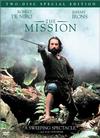
1. The Mission
In fact, I talked about this movie in connection with burdens of guilt in two related entries in April--"Release" and "Release, Part 2."


2. The Prince of Egypt

3. Tootsie

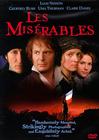
4. Les Miserables


This is a wonderful story of forgiveness and redemption!


5. O Brother, Where Art Thou?

6. To Kill a Mockingbird

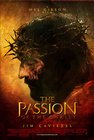
7. The Passion of the Christ
This movie was the subject of much controversy. I think we as a society
don't want to think about Christ's suffering.


8. A River Runs Through It


9. The Apostle

10. Cinderella Man

11. Hamlet
The best Hamlet of all time is Mel Gibson, hands down, no doubt
about it.


12. Chronicles of Narnia: The Lion, the Witch, and the Wardrobe

13. East of Eden
This is a great story, one of James Dean's few movies. It is based on John Steinbeck's novel by the same name.