Saturday, May 20, 2006

DaVinci Code

America is abuzz about the new movie The DaVinci Code. Zillions of people are flocking to theaters to see it. Personally, I can’t wait to see it.

I read the book, and I thought it was a well-written, exciting story. I have a few pre-formed ideas about the movie.

· Tom Hanks is one of the best actors of the entire age. I automatically like every movie he is in. I can’t picture him as Hamlet, but he could play any other role.

· The book is fiction. The movie will also be fiction. The way the story is presented in the book gives it an air of being true, but the same can be said of Robinson Crusoe. My mind will not be changed about the divinity of Christ. My faith will not be shattered because of this movie. My faith is founded on solid truth: Jesus was both God and man.

· I am afraid that large numbers of people who don’t know much about Jesus will get the wrong idea about him and believe the story. I am afraid that people will think they know the newly discovered (un)truth that Mary Magdalene was married to Jesus and had a child by him. Mary Magdalene was a strong supporter of Jesus; she loved him, but there is no mention in the Bible of marriage between them. He cast out seven demons from her and saved her from darkness. She knew he was the Christ—the long-awaited Messiah. When she saw that he had risen from death, she cried out, “Rabboni!” That means something like “great teacher”! Women don’t call their husbands that.

· I believe Christians should see the movie so that they can help clear up misconceptions that people will have as a result of seeing it. I don’t think we should stay away from it in protest. If we do, we won’t be able to communicate with people who have been misled by it.

Catholics have requested that their members not see the movie. It puts Opus Dei, a Catholic organization, in a bad light.

Messianic Jews, on the other hand, are encouraging people to see it. The Chosen People Ministry, headquartered in New York City, sponsored a debate/discussion of the movie on Monday, and it was attended by a huge crowd of 600 at the Hilton. About 8,000 people listened to it on the Internet. Because of the great demand, it will be re-broadcast Tuesday evening, May 23, at 7:00 eastern time (8:00 central time). To listen to the debate, tune in to http://www.davincidebateny.com/ on Tuesday night. Their e-announcement said, “Don't miss this opportunity to spark a conversation with your friends about the claims of the book and the truth of Messiah!” Their web site is found at this address: http://www.chosen-people.com/

Sunday, May 07, 2006

To Sock and Bop

My son and daughter-in-law make a practice of teaching their three little boys (my grandchildren!) the words to all kinds of Christian songs and hymns. The five of them talk, pray, and sing together all piled up in one of the boys’ beds at bedtime. The boys are little—one, three, and five. But they pick up the words and tunes quickly, even the old hymn classics, and they will happily perform for us if we ask.

One night about a year ago, they were singing “Victory in Jesus,” and the boys know the words:

O victory in Jesus, my Savior forever.
He sought me and bought me with his redeeming blood.
He loved me ere I knew him, and all my love is due him.
He plunged me to victory, beneath the cleansing flood.

Isaiah, the oldest, was belting it out with great gusto. He stopped suddenly after the second line and asked, “Mommy—why does Jesus sock me and bop me?”

Thursday, May 04, 2006

Of Motherhood

Mother’s Day is coming up in a week or so. If you aren’t a mother, you probably have at some time had a mother. So it’s time to think about motherhood.

I have three children. They are grown now and have children of their own—my grandchildren! Even if my kids are adults now, they are still my kids. And I’ll always love them more than I can possibly say. I believe children are gifts from God. I feel that being a mother has been the most important and most rewarding thing I’ve ever done. When they all come to visit for a couple of days and then leave to go back to their own homes, I usually have a little empty-nest syndrome popping up again—not as bad as in the first years—but it’s there, all the same.

This excerpt was taken from a Boundless Webzine article called “Children Are the Good Life,” written by Roberto Rivera y Carlo. Read the whole article at http://www.boundless.org/ --It’s good!

Quick: name the builder of the Great Pyramid at Giza. Who built the temple complex at Angkor Wat? While the buildings, among the greatest monuments ever built, still stand, their builders are all but forgotten, save to a relative handful of specialists. Given that none of us can reasonably hope to match this level of accomplishment, what's reasonable is to place our hope for immortality in our children.

(You see this way of thinking at work in Genesis where God promised Abram that He would make his descendants as "numerous as the stars." Abram's more accomplished contemporaries are all-but-forgotten while, through his offspring, all nations on Earth were blessed.)

There's another, more personal, way in that children are a blessing: they can transform you. They teach us what unconditional love, devotion and sacrifice mean in a way that no other experience can. They help us to distinguish what's important from what's not and what's lasting from what's transient. In other words, they make us better people.

Friday, April 28, 2006

Release, Part 2


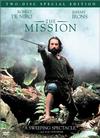
(From my last post: Rodrigo Mendoza is played by Robert DeNiro in the 1986 movie The Mission.)

Mendoza: “For me there is no redemption, no penance great enough.”

Father Gabriel: “There is. But do you dare to try it?”

Mendoza: “Do you dare to see it fail?”

Mendoza believes he is so far from God and his guilt is so terrible that he doesn’t deserve to be forgiven. The Jesuits try to explain to him that God’s forgiveness is free, a gift of grace. But Mendoza can’t see it; he won’t let anyone cut loose the symbolic bag of heavy armor he drags around, even though it causes him great hardship, even endangers his life.

We are like that. We feel so unworthy that we drag around for years our chains of regret, grief, hurt, anger, and guilt, maybe a lifetime. They weigh us down and cause us unspeakable pain. We may even become so used to them that we’d feel strange without them. They are part of us. And we may not even be able to speak of them, even though they loom huge with us. We say we are not worthy of God’s forgiveness. We live pitiful half-lives.

A friend once told me, “I’ve been too bad in my life. God doesn’t want to hear from me.”

Well, it is true that we are not worthy or deserving of anything. But it is not true that God’s back is turned to us because of it. God is not a human being. He does not play games with people or manipulate us with accusing voice. He longs for us to bring that heavy bag of junk to him so that he can make it instantly disappear. Being worthy has nothing to do with it. He is all love and light. It’s all about him—not us. He loves unconditionally, no strings attached. We don’t have to deserve anything.

Once we give up that huge baggage, life becomes different. Maybe you just discovered that on, say, the Walk to Emmaus. Maybe as a result, you have a new spring in your step, a twinkle in your eye, a smile on your face.

You have tapped into the awesome, breathtaking power of the Holy Spirit. Because of him, you can rid yourself of that nasty voice that might be saying to you now, “Who do you think you are? You think God has really forgiven you and given you your life back?” Satan is the source of that voice. Many people today don’t believe in him, but he’s real; we know for certain because we can hear his voice whispering those things in our ear. Through the Holy Spirit, we can defeat his influence.

You have the power to banish Satan; just say, “Get out of here and leave me alone, in the name of Jesus!” Just put on the whole armor of God, and you’ll be protected. The Bible says, in Ephesians 6, that we must “be strong with the Lord’s mighty power” and “stand firm against all strategies and tricks of the Devil.”

We can be sure that this battle is “against the evil rulers and authorities of the unseen world,” the “mighty powers of darkness who rule this world.” Here’s what Paul says, in the New Living Translation:

Use every piece of God's armor to resist the enemy in the time of evil, so that after the battle you will still be standing firm. Stand your ground, putting on the sturdy belt of truth and the body armor of God's righteousness. For shoes, put on the peace that comes from the Good News, so that you will be fully prepared. In every battle you will need faith as your shield to stop the fiery arrows aimed at you by Satan. Put on salvation as your helmet, and take the sword of the Spirit, which is the word of God. Pray at all times and on every occasion in the power of the Holy Spirit. Stay alert and be persistent in your prayers for all Christians everywhere.

Wield the sword of the Spirit and don’t let him rob you of your joy!


“Sword of Solomon II-s.” Real Armor of God. 28 Apr. 2006 http://www.realarmorofgod.com/shop/product_info.php/


Thursday, April 27, 2006

Release


Rodrigo Mendoza is an 18th-century Spaniard played by Robert DeNiro in the 1986 movie The Mission. You could say he carries around a lot of personal baggage.

Mendoza’s guilt is symbolized by a large net filled with armor and weapons. He keeps it tied to his back by a long rope and makes himself drag it as he and the Jesuit monks travel on foot through forest and river.

Father Gabriel, played by Jeremy Irons, tries to convince Mendoza to stop punishing himself, but nothing anyone can say persuades him to release the burden.

Mendoza: For me there is no redemption, no penance great enough.

Father Gabriel: There is. But do you dare to try it?

Mendoza: Do you dare to see it fail?

He believes he is too far from God to deserve anything. He refuses to allow anybody to cut it loose, even though it almost makes him fall to his death, climbing up slippery rocks beside a mountain waterfall.

Finally, he almost makes it to the top, but the net is caught on rocks. One of the Jesuits takes out a knife and cuts the rope. The heavy bag of armor falls a long way into the river. Mendoza is released from his impossible burden and saved.

Maybe you have been feeling a lot like Rodrigo Mendoza. Maybe you have been symbolically dragging around for years some tremendous bag of rusty iron scraps or stuff that smells like death. Maybe you just got back home from spending a few days at some event, like, say, the Walk to Emmaus. And maybe as a result of what happened there, you feel closer to God now than you had ever dreamed possible—and maybe you feel like Mendoza did when he reached the top of the rocks by the waterfall and the Jesuit cut loose his burden—alive and freed.

The air at the top is cool and fresh and the music is sweet . . . .


Earth’s Biggest Movie Database. http://www.imdb.com/title/tt0091530/

Monday, April 17, 2006

The Perfect Lamb

Last night I saw Who Is Jesus? I was afraid it might be one of those television shows that try to prove that Jesus was just a man, not the son of God. But it was a review of his life from the Christian viewpoint. It was well done, without being sappy, like some things like that are.

One of the main points of the documentary was that Christianity has its roots in Judaism. Jesus was a Jew. The narrator said, “He was an observant Jew” who was “trying to purify his religion.”

The New Testament, of course, confirms that fact—rather, more accurately, what the narrator said confirms the Bible. In Matthew 5:17, Jesus said, “Do not think that I have come to abolish the Law or the Prophets; I have not come to abolish them but to fulfill them.”

The film described several important aspects of Christianity that are deeply rooted in the Jewish religion, especially baptism, resurrection, and communion. Communion originated with the Seder meal, in celebration of the Jewish Passover. The first Christian communion, we could say, was when Jesus and his disciples ate the Seder meal together to celebrate Passover the last night before he was arrested. In Luke 22:19, we're told that he said to the disciples, "Do this in remembrance of me." The film’s narrator said that the early Christians continued to celebrate Passover with the Seder meal for a time, but eventually, it was shortened to the bread and wine—or grape juice and wafer—that we know today.

The Bible tells us that the Passover was instituted by God as a holy time to be commemorated through all generations as the time that God liberated the Hebrews from Egypt where they had been held in slavery for four hundred years. The Egyptian Pharaoh had stubbornly refused to let them go even after God sent plagues to punish the Egyptians. It came time for the final plague.

On the first Passover, then, God told the Hebrews to kill a perfect, spotless lamb and put some of its blood around the doors of their homes. This would protect them as his Spirit passed among the obstinate Egyptians to kill the firstborn of every family. The Egyptians finally agreed to release the Hebrews, and God used Moses to lead them out of captivity, eventually into the promised land, Israel. Exodus 12 details the celebration of the Passover.

The ancient Hebrews celebrated the Passover for centuries; comprehension of the meaning of the perfect sacrificial lamb ran deep in their blood. Years later, in the perfect timing of God, he sacrificed his own perfect lamb, his son, to deliver them—and all mankind—from captivity, into the promised land of eternal life. It was a complete circle of saving sacrifice, life in the blood of a lamb, from the night of Passover in Egypt to the crucifixion and resurrection of Jesus.

The complete Jew, then, is the Jew who sees the sacrifice of God’s lamb as the completion of the circle and believes that this lamb was the long-awaited Messiah.

Who Is Jesus? Fox News Channel. 16 Apr. 2006.

Thursday, April 13, 2006

Truth: To Be Right

When I was about seven years old, I got into an argument (one of many) with my younger brother about what day of the week it was. I was older and smarter, I thought, and he should know that. I argued and insisted, until I turned red and sweaty, that it was Wednesday. He eventually fetched the ultimate authority, our mother, who affirmed that it was, indeed, Tuesday. I cried and was mad and humiliated.

Happily, I grew out of that tendency to be so sure of myself. Some adults are always right. Or at least they think they are. And they are pretty sure of it. The fact of being right can become sort of an obsession, so that the obsessed one can’t face the idea of even the vague possibility of being wrong. Why are we so driven to be right?

I believe the inner need to be right was hard-wired in us by God when he first scooped up a handful of dirt to make a man. This drive makes us want and need to find truth. Because we are made that way, we recognize his truth when he reveals it to us—we know that it is truth.

God also pre-programmed us to need love. It’s deeply connected to our need to find truth, this desperate hunger to love and be loved, to see our lives through the beauty of love. We can’t live without love and function at all.

We seek the beauty of truth and love. God is all loveliness and love and truth, and he made us seekers so that we would yearn for him. He is love, in his nature and in his word; his love is truth; in truth is great beauty. John Keats said in “Ode on a Grecian Urn,” “Beauty is truth, truth beauty.” (Remember, most English teachers are poetry nuts.) He was right, but he didn’t take that thought far enough. It’s an unending circle—love, beauty, truth.

Truth is revealed to us by the Spirit of God, when we seek to be taught by him. When his Spirit lives in us, we have a sense of discernment so that we can recognize truth when he reveals it. But if his Spirit is not in us, we don’t see it: it goes right over our heads, and we settle for untruth and half-truth. And we often bind our lives to ideas that are not truth. We may even get to point where we would argue that it is Wednesday, when in fact, it is Tuesday.

The Bible says in First Corinthians 2:12-14,

We have not received the spirit of the world but the Spirit who is from God, that we may understand what God has freely given us. This is what we speak, not in words taught us by human wisdom but in words taught by the Spirit, expressing spiritual truths in spiritual words. The man without the Spirit does not accept the things that come from the Spirit of God, for they are foolishness to him, and he cannot understand them, because they are spiritually discerned.

. . . what God has freely given us—love, grace, acceptance, forgiveness—that’s the beautiful truth.


Keats, John. “Ode on a Grecian Urn.” The Norton Anthology of English Literature. Vol. 2. Ed. M. H.
Abrams, et al. New York: Norton, 2000. 851-53.

Wednesday, April 05, 2006

To Enter the Kingdom of God

Can a rich person enter the kingdom of heaven—or do you have to be poor?

The Bible says a young man asked Jesus what he had to do to gain eternal life. And Jesus told him to obey the commandments. The man said he had always kept the commandments. “What do I still lack?” he asked. Jesus told him he should sell all his possessions and give the proceeds to the poor so that he would “have treasure in heaven. Then come, follow me.” The young man went away, very sad, “because he had great wealth.” Jesus’ disciples were there, listening. This must have been an awkward and disturbing moment for them.

This comes from Matthew 19, verses 16-26, in the NIV translation of the Bible. I looked at the more informal, paraphrase-type version in The Message, and I like how it presents the rest of this scene.

As he watched him go, Jesus told his disciples, “Do you have any idea how difficult it is for the rich to enter God’s kingdom? Let me tell you, it’s easier to gallop a camel through a needle’s eye than for the rich to enter God’s kingdom.”

The disciples were staggered. “Then who has any chance at all?”

Jesus looked hard at them and said, “No chance at all if you think you can pull it off yourself. Every chance in the world if you trust God to do it.”

I believe the key to the central question lies in what Jesus said, with that piercing look. Here’s the real point of the whole scene: “No chance at all if you think you can pull it off yourself. Every chance in the world if you trust God to do it.”

I don’t think he meant that people have to literally sell all their possessions; he often spoke in ways that had multiple meaning. I believe he meant that the wealthy are just like the rest of us. If we value anything more highly than God, we don’t have a chance of entering his kingdom.

If we think we can take care of our own problems—unload our own baggage—dump out the trash of our lives—all by ourselves, we’ll get our chance to do that. And we’ll find out that we can’t do it. Usually, we have to hit bottom before we realize what control freaks we have been and give over to him our precious, beloved “control of our own lives.” We find out that all our “cool stuff” like our computers, cell phones, MP3’s, and sports cars can’t come close to filling the empty holes in our hearts. The list is long of celebrities who have drug addiction problems and terrible unhappiness, in spite of all their riches and fame. Wealth can’t buy peace of mind.

It is harder, certainly, for people who have plenty of money to come to the place where they realize that God is the only source of lasting peace. After all, they are more able to buy what the world teaches us we need for peace and fulfillment, things—more and more possessions. And they can, for a while, at least, afford to buy drugs and alcohol, those substances that give people a temporary, imitation sense of peace.

On the other hand, there’s a long list of wealthy people who love God, who realize that their riches are gifts from him, to be used for good purposes, according to his guidance. Their hearts are peaceful, humble, and generous. They follow his direction, help other people, share their possessions—and belong to the kingdom of God.

It isn’t the fact of having riches that causes despair and keeps a person out of the kingdom of God. It’s a heart condition, the fact that a heart, wealthy or not, doesn’t know God. It is love that brings peace—love comes from God. His love brings us into his kingdom, regardless of whether we are rich or poor.

Night--A Remembrance--3/26

The New York Times called Elie Wiesel’s book Night “A slim volume of terrifying power.” That’s what it says on the front cover. It is a choice of Oprah’s Book Club. It is indeed powerful—and disturbing.

Wiesel, who was awarded the Nobel Peace Prize in 1986, has written over forty books, both fiction and nonfiction. Night was his first. In his preface, he says, “If in my lifetime I was to write only one book, this would be the one. Just as the past lingers in the present, all my writings after Night, including those that deal with biblical, Talmudic, or Hasidic themes, profoundly bear its stamp, and cannot be understood if one has not read this very first of my works” (vii).

He explains that if he had not written this book, he would not have been able to write any of the others. It is easy for me to see why, after reading it. He had to write it, to be able to deal with what happened and to be able to have any kind of life afterwards.

The book is about his experiences in 1944-45. He was only fifteen years old when his family was taken by the Nazis, along with the many other Jewish residents of Sighet, Transylvania, to Auschwitz and later, to Buchenwald. He and his father were separated from his mother, his little seven-year-old sister Tzipora, and his two older sisters as soon as the railroad cars unloaded at Auschwitz. He never saw his mother and sisters again. He asks, “How was one to speak of them without trembling and a heart broken for all eternity?” (ix).

It is a terrible story of how the Jews discovered “a demented and glacial universe where to be inhuman was human, where disciplined, educated men in uniform came to kill, and innocent children and weary old men came to die” (ix). Families were torn apart; the oldest, youngest, and most infirm were murdered because they were not useful. The strongest survived, at least for a time, because they could be made to work. They lived in inhumane conditions, starved, frozen, tortured. Wiesel says he became less than human at times, a starved, walking corpse.

He tells of the deep concern he and his father had for each other. Many times, one or both of them would have died if it had not been for the other urging him on. Near the end of the war, thousands were moved from Auschwitz to Buchenwald. Many died during the all-night march, running and trekking through below-zero weather. Exhausted, at one point Wiesel fell asleep in the snow, but his father made him get up so that he would not freeze to death. In the last hours, the death-thin people were transported in open cattle cars, a hundred to a car. He and his father were among only twelve of the hundred who survived to leave their cattle car.

On the way to Buchenwald, in a freezing barrack at the village of Gleiwitz, the men were allowed to sleep, but sleep was difficult. The sixteen-year-old Wiesel was able to survive the ordeal because of his youth, no doubt; but his father was sick beyond mending. Juliek, a Jewish musician, had risked all to bring with him his violin, and he began to play in the dark barrack “here, at the edge of his own grave” (95). The musicians had been forbidden to play anything written by Beethoven. But now, Wiesel says,He was playing a fragment of a Beethoven concerto.

Never before had I heard such a beautiful sound. In such silence. . . . .

The darkness enveloped us. All I could hear was the violin and it was as if Juliek’s soul had become his bow. He was playing his life. His whole being was gliding over the strings. His unfulfilled hopes. His charred past, his extinguished future. He played that which he would never play again.

I shall never forget Juliek. How could I forget this concert given before an audience of the dead and dying? Even today, when I hear that particular piece by Beethoven, my eyes close and out of the darkness emerges the pale and melancholy face of my Polish comrade bidding farewell to an audience of dying men.

I don’t know how long he played. I was overcome by sleep. When I awoke at daybreak, I saw Juliek facing me, hunched over, dead. Next to him lay his violin, trampled, an eerily poignant little corpse. (95)

In his Nobel acceptance speech, Wiesel said that the “honor belongs to all the survivors and their children and, through us, to the Jewish people with whose destiny I have always identified” (118). He has dedicated his life to making sure that people remember what happened—that they don’t forget that this kind of thing can happen—and to all victims of injustice and suffering everywhere.

Broken Cisterns--3/22

In my last entry, I wrote about my church’s prayer list. Near the end of it, I said, We have noticed that the people in the “Physical need” section come and go from there, in general, much faster than they do in the “Spiritual need” section. Many more inhabit the “Physical need” section. I am pondering this fact, and I think I will have more to say about it soon. Today, I have some more to say about it.

I believe people are much more likely to notice that they have physical problems than spiritual ones. We would readily admit that we have chest pains or difficulty breathing or a broken leg and would get ourselves quickly to a doctor or even a hospital emergency room. We want to be fixed—as soon as possible. We can’t live with an open wound or hobble around on a sprained ankle or go around bleeding.

On the other hand, people do not want to tell anybody else that they feel miserable, angry, mistreated, guilty, or lonely. They figure they can deal with those things themselves. Many will suffer along for years and never ask for help or even sympathy from either their closest friends or God.

And then some people won’t admit to themselves that they actually have problems—too painful to look at them. It’s easy to limp along as an emotional cripple, hiding the pain of the moaning spirit. We think others won’t know if we don’t even acknowledge it to ourselves. But they can tell—those who love us and spend time around us.

In the “Spiritual need” section of our prayer list, hardly anyone is there because they asked us themselves for prayer. It’s the people who love them who ask us to pray for them. We call that section “For people who need special prayers and support.” We have about ten soldiers in Iraq listed and one person who was lost in the Philippines. Most of the others are there because somebody was concerned about their emotional pain and blockages of the spirit.

Many of us think our problems are too insignificant to put before God; he couldn’t possibly be concerned with such things because, after all, he has the entire universe to run. One of my friends told me, “I’ll go to him when I kind of get it all together. I’m too much of a mess now.”

But the truth is, he does care, and he wants us to come to him just the way we are, however messed up we may be. And he has cool, living water for our parched lips, salve for our burning souls. In the Old Testament, God mourned over the fact that people wouldn’t come to him for help: “My people have committed two sins: They have forsaken me, the spring of living water, and have dug their own cisterns, broken cisterns that cannot hold water” (Jeremiah 2:13).

Jesus suffered over people—how harassed and worried they were, “helpless, like sheep without a shepherd” (Matthew 9:36). In Matthew 11:28-30, he said, “Come to me, all you who are weary and burdened, and I will give you rest. Take my yoke upon you and learn from me, for I am gentle and humble in heart, and you will find rest for your souls. For my yoke is easy and my burden is light.”

Five or six people are on our list in that section because they actually asked us themselves to pray for them—that God will help them deal with their crisis or pain. When we finally find out how his healing can mend our poor broken hearts, we learn to run to him for every kind of need—not just the sprained ankle or headache, but every heartache.

Power of Prayer--3/19

Our church has a two-page, single-spaced, small print prayer list that gets updated every Sunday. We circulate it in our Sunday school classes. Here’s how that got started.

In my Sunday school class about five or six years ago, we started keeping a list of young pregnant mothers who we wanted to pray for. We prayed and cheered for them and were blessed by that. After a few months, people with other kinds of needs began to ask us to pray for them. So we started adding everybody who asked for prayer and also people we knew of who had needs. We started printing a Bible verse at the bottom.

After a couple of years, our list grew so long and tangled that we decided to organize it. So then it got two more categories, besides the young mamas-to-be: people who needed prayer for physical healing, and people who had some kind of spiritual struggle going on. We listed beside the people’s names a brief description of their problem. Sometimes people don’t want their names on the list, but they want us to pray; in that case, we just say something like “a man who is in a crisis.” We believe God knows who and what it is, so it isn’t important that we print his problem in detail.

The list grew and grew. We removed their names when their problem was resolved. But we found that many people needed long-term prayer; they couldn’t ever be moved off the list. So then we decided to create categories for them. At that point, we had five categories: For expectant mothers and fathers; For people with ongoing physical problems; For people who need physical healing; For people who have ongoing needs for prayer and support; and For people who need special prayers and support. That kind of organization helped a great deal.

After a couple more years, the other Sunday school classes wanted us to give them copies so that they could pray with us. But then we realized we needed a “Praise” section—because it was amazing how often people told us how much our prayers helped them—what wonderful results they were seeing—how they felt the presence of God. So from then on, our “Praise” category always has at least one entry: “God because he answers prayer, never changes, and is the beginning & end of everything, the healer & redeemer; the comforter & our refuge in trouble & our savior.” Usually it has at least two or three more, because somebody is healed of either a physical ailment or a nagging spiritual problem. We don’t just remove them from the list; we praise God for their healing.

Since then, we have added a couple more categories: For people who have immediate, critical need for prayer, for any reason; For our church; and For our leaders (national and local). We leave the “Critical need” category there, even if there’s nobody currently in that situation. People don’t stay there very long.

We have noticed that the people in the “Physical need” section come and go from there, in general, much faster than they do in the “Spiritual need” section. Many more inhabit the “Physical need” section. I am pondering this interesting aspect of the list, and I think I will have more to say about it soon.

We have found that prayer is very real and powerful, and it binds us together. We know that God hears our prayers and answers them in loving ways. He is concerned about even our smallest needs.

Monday, March 13, 2006

On Nieztsche--"God is dead."

Friedrich Nieztsche wrote, in the 1960’s, that “God is dead.” I recall that everybody was horrified that he would say such a thing. I was one of those who thought Nieztsche was awful, even though at that time, I was into believing that you couldn’t know for sure if God is real—hypocrite that I was.

A few days ago, I was preparing to give a talk about the importance of “Growth through Study” for a Walk to Emmaus. I decided to show the effects on my li fe of things I have studied and read, at different times in my life. So I looked up Nieztsche, and I was amazed, lo, these forty years later, at what I found.

Contrary to what I, and everybody else I knew, thought at the time, Nieztsche was not literally claiming that God is dead. He personally did not believe it. What he meant was that people in Western culture had become so self-sufficient that they no longer depended upon God for anything. He was saying that life for such people was going to be very difficult, lonely, and pointless. He was lamenting the state of the human soul.

I wish I had paid better attention back then.

Sunday, March 12, 2006

To Take a Stand, Part 2

Continuing this line of thought—about abortion—I want to say that I have no first-hand knowledge about that experience—only what I have observed and read. Several years ago, a young friend of ours had an abortion, and she was devastated afterwards. At first, I didn’t know what was wrong.

Gina* came to my office but could not tell me what was troubling her so deeply. Her eyes were dark and tragic, and she was very pale. I thought she was sick at first, but soon I could tell it was something worse—a sickness in her spirit. She just shook her head and sighed, and her eyes were filled with tears. I hugged her as she was about to leave, and she clung to me and sobbed for a long time. I was bewildered—she had never been so serious before. Then she left my office; she went to live in another state. Several months later, a friend of hers told me about the abortion. I understood, finally.

I should have known that Gina might do that. Gina had told me some time earlier about her friend Megan*, who was pregnant and considering an abortion. I suggested that maybe Megan should put the baby up for adoption, and said that I would help her. Gina said, "Oh, no, if Megan went ahead and had the baby, she knows she wouldn't be able to give it away!"

Before I could even think about my reaction, I blurted out, "She couldn't give it away, but she could kill it?"

Gina scolded me: "Judy! Don't say 'kill'!"

A blog called "Beer, Barbecue, and Bible Study” tells a similar story—from a man’s point of view. Not only is the woman who has an abortion affected; any time a baby has been conceived, there is a man around somewhere who is involved, too. Men—fathers—can be just as deeply impacted by abortion as mothers. This is Pauly's story.

25 years ago, I took part in a decision that separated me from the life of my unborn son. I can only imagine what type of young man he would be today. Sometimes when I mow the lawn or am doing work around the house, or on my car, I think how much I miss not having him here next to me, helping me, telling me about his day, learning from me, sharing jokes, or telling me his plans. The decision for abortion didn't seem like much of a 'choice' at the time. It seemed like there was no other choice. We were pressured by the doctor, society's view at the time, and the fact that we weren't married. It seemed like such an easy thing to do at the time, and I had no idea how it would impact my life for years to come.

I lived with this silence for the next 16 or 17 years. There were many manifestations of my shame and guilt, mainly in the way I related to women and even other children. I could never get close to my daughter, who was a year younger than what my son would have been. Even though I loved her so deeply, there was a part of me that could just not let her in too close to me. How I wish I could have dealt with the grief and shame earlier in my life. Abortion recovery is not really talked about openly in most churches. Even though the subject of abortion is sometimes addressed in churches, it is usually brought up in the context of sin to be avoided, not something of the past to be dealt with. I'm afraid many pastors or congregations are not really equipped with the understanding or sensitivity to deal with post-abortion recovery, especially when it comes to men.

We can all relate to why a woman who chose abortion would need to deal with that decision at some point in her life. Certainly, any woman who would carry her baby to full term, and then lose it suddenly would be looked on with compassion and be recommended for counseling. And even worse, if a woman gave birth to her baby, and then purposely ended its life, she would be looked at as evil, sinful, and judged by society, the church, and the law. But because ending a life while still in the womb is 'legal' under U.S. law, that 'choice' can be made in secret, and it is between a woman, her doctor, and only those who she shares it with. Many women live with shame and guilt, in silence; grieving alone, and dealing (or not dealing) with the loss of her child. It is an awesome burden, and for some, one too great to bear alone.

One thing we tend to conveniently forget, though: for every woman who terminates a pregnancy, there is a man involved too. Until a few years ago, I never thought about that impact on my life, my decision-making process, or my inability to be emotionally or spiritually intimate with my wife and daughter. Even more of a disconnect was evident with my 2 step-sons. Today I can look back and see a pattern of self-destructive behavior and sin that was directly related to my part of a 'choice' that was made in ignorance.

In 1997 I met Steve, and together we met weekly for several months to walk me through the beginnings of a painful process of healing and restoration of a very damaged and shame-filled heart. Over those weeks, I began to see how my 'choice' influenced many of the other decisions I made, especially when it involved women and children. Over the years that followed, I realized there were many other things I needed to deal with, and even today, I continue to have new revelations. The healing process is a long and sometimes painful journey. I haven't 'arrived' yet.

I'm not through sinning or making bad decisions, but now the process of recovering from those decisions is shorter, and I tend to not be so easily influenced by things I know will have long-term or fatal consequences. Every day presents new challenges. At the beginning of this year, I had a profound revelation of how short my life is. As I continue this process of healing and discovery, I am comforted by a very merciful and forgiving Father. His grace is what gets me through, and allows me to be changed, on day at a time.


I am grateful to Pauly for sharing these most personal and difficult thoughts. I think many men and women don’t have any idea that such devastating results are possible. Then they have the cold winds of guilt and hurt howling in their hearts for years.

*Their real names are not Gina and Megan!

Wednesday, March 08, 2006

To Take a Stand

South Dakota lawmakers amazed everybody recently by passing a bill to outlaw abortion in their state. If Governor Mike Rounds decides to sign it, it will become law July 1.

I remember that five or six years ago—or maybe ten—some fanatical opponents of abortion were firebombing abortion clinics and even killed a few doctors who were known to perform abortions. A newsman interviewed a distraught doctor who asked, “When will the killing end?” He was talking about the killing of doctors and other workers in abortion clinics.

That seemed to me to be a very ironic question. What I wanted to know was different: when will the killing of babies end? Killing is wrong, whether we’re talking about doctors or babies. Killing babies is wrong, whether we’re talking about an abortion-style murder or a Scott-Peterson-type murder.

For several reasons, I believe opponents of abortion should not resort to violence. Killing and bombing are morally and legally wrong; people cannot be allowed to act that way just because they disagree, no matter what the situation is. And besides that, peaceful ways of showing opposition are always more effective. People who protest through violence are automatically cancelling out any good they might have intended. (See my series about Martin Luther King, Jan. 16, 17, and 18.)

According to a report by the Guttmacher Institute, Rick Santorum said this:

Back before 1973, there were all sorts of claims in favor of legal abortion. Legal abortion would lead to less domestic violence, since young women would not be forced into unhealthy and inappropriate marriages. Fewer desperate women would commit suicide. There would be fewer out-of-wedlock births. There would be fewer divorces. There would be fewer children in poverty, less crime, and less child abuse, since all children would be wanted and grow up in stable families. None of this happened. Not a single social ill improved as a result of legal abortion: in fact, they all got worse, much worse.

The Guttmacher Institute said that not all of Santorum’s stated facts were totally backed up by statistics, especially concerning crime and female suicide. But, they said, most of his assessment is true.

I would like to say that I believe the lawmakers of South Dakota displayed a great deal of moral courage in taking this action. It is completely legal, and it is the act of making a stand. Regardless of what happens as a result, it seems to me to be a step in the right direction.

Sunday, March 05, 2006

On Being Christ-Like

My cousin Mike and I have been e-mailing about the Christian life, among other things. He has some good ideas, and he told me I could include here this message that he sent me. Like me, Mike became a strong Christian not so many years ago. He is a retired football coach, teacher, and counselor. Mike wrote this:

I do believe in the unlimited power of the Lord.

I believe that his way of life is the answer to all questions.

The amount of complication we have in our life is in direct relationship to the distance we are from God. We will always have problems, but they only become complicated when we depend on ourselves for a solution. Knowing this, isn't it interesting how we humans continue to dig in and try to fix everything?

How do we learn to depend on God in all situations? Now that is a question worth consideration.

I don't think that is human nature. Maybe the more human we are, that defines us as thinking we need God less in our life. You have to admit that Jesus would not fit in our society today any more than he did in his life on earth. He would be a strange duck, so to speak.

If we can succeed in becoming strong Christians, we will move more toward Christ-like and less human-like; again, we would also become strange ducks. We seem to hate, lock up, ignore, separate, and ostracize anything or anyone that is different.

How do we make the decision to become less human and more Christian?

I have made that decision and want to become more Christian (Christ-like), but my human traits are very strong and they are not going away, and even when I think I am making headway by getting my human reactions under control, something will happen, and before I can get it under control I am a full fledged human again, and I have to start all over again.

I hear about "born-again Christians"; my transformation into being a Christian is more like a "work in progress" no flashes or lightning. The Lord is not doing a very good job of controlling my temperament, or maybe I still haven't turned that over to him and I am still trying to do it myself. For what ever reason, when that human characteristic comes out of me, people do not see a Christian. At least, now I know what I am trying to do, and I am improving.


What Mike said sounds so much like what Paul said in Romans 7. Paul was so disgusted with himself because he kept wanting to do the right thing, but kept on doing the wrong things. Here is what Paul said, from The Message:

"I know that all God's commands are spiritual, but I'm not. Isn't this also your experience?" Yes. I'm full of myself--after all, I've spent a long time in sin's prison. What I don't understand about myself is that I decide one way, but then I act another, doing things I absolutely despise. So if I can't be trusted to figure out what is best for myself and then do it, it becomes obvious that God's command is necessary.

But I need something more! For if I know the law but still can't keep it, and if the power of sin within me keeps sabotaging my best intentions, I obviously need help! I realize that I don't have what it takes. I can will it, but I can't do it. I decide to do good, but I don't really do it; I decide not to do bad, but then I do it anyway. My decisions, such as they are, don't result in actions. Something has gone wrong deep within me and gets the better of me every time.


It happens so regularly that it's predictable. The moment I decide to do good, sin is there to trip me up. I truly delight in God's commands, but it's pretty obvious that not all of me joins in that delight. Parts of me covertly rebel, and just when I least expect it, they take charge.

Then, in the New International Version, Paul says

What a wretched man I am! Who will rescue me from this body of death? Thanks be to God--through Jesus Christ our Lord!

At times it may seem like we are absolutely so separated from God that he would never spend a minute on us. But because of Jesus, there is hope for us.

Friday, March 03, 2006

To Say or Not Say Hello

My husband and I went into a fast-food-chicken restaurant recently; because of the long line, an employee came over to us to take our order. Beyond two or three people standing in line, I saw one of my former students, working—taking orders and going back and forth to get food. I was going to say hello to her, but she never looked at me. I felt like she knew I was there, and that made me feel strange.

This is a silly and trivial thing, and nothing to be bothered about, really. However! I am noticing a trend in that direction among the young—from about puberty to about twenty-two—okay, high school and college age people. (And I am not trying to pick on the young. It is just something I have noticed about the way they do things, which is different from the way most other people around here act.) I know I am not imagining it, because I have talked to several other people who have noticed the same thing and have been made to feel strange by it. It happens to more people than just me.

What happens is this. You are walking somewhere, and here comes the kid, whom you recognize. His eyes are looking away, down, out to the side, anywhere but at you. You are the only other person around. He never looks at you, but you know that he knows you are there. One of two things happens.

1. You assume he is busy listening to voices somewhere (his i-pod?) or deep in meditation, and you don’t want to disturb him. You just pass right by him and don’t say a word. He keeps going, never having looked at you. You feel as if you are in the Twilight Zone.

2. When you get about even with him, you say, “Hi, Kevin!” or whatever his name is.
He suddenly looks at you, somehow surprised to see you, and says, very cordially, “Well, hello, Mrs. McGillicuddy!” or whatever your name is. Then he may even stop and talk for a few minutes.

But the thing is, he doesn’t speak—or even look—unless you make the first move.

Are we all so separate from each other, or terrified of each other, or terrified of what we might say, or nervous about how we might be perceived, that we can’t even look at each other? And—why am I bothered by this?

In that chicken restaurant, I should have just spoken out across the customers and said, “Hello, Christi!”* I’ve decided that from now on, I’m going to make the first move. I’d rather do that than be in the Twilight Zone. There are enough things that separate people already, as it is—important things.

*This is not really her name!

Wednesday, March 01, 2006

Ash Wednesday

Today is Ash Wednesday.

I was a Baptist for all my life until I married; at that time, I joined my husband in the Methodist church. That means I have been a Methodist for some thirty-five years. But I have been paying attention for only twelve years. So I never really knew what Ash Wednesday is until the past twelve years. Baptists don’t have Ash Wednesday services when they get a cross in ashes marked on their foreheads. Methodists do. What is the significance of that?

My pastor said in the service tonight that Ash Wednesday marks the beginning of the season of Lent, the forty days before Good Friday. Traditionally, Good Friday represents the day that Jesus was crucified—a dark day. It is the time of an inner search, he said. Ashes have for centuries stood for darkness, heartbreak, and despair. The ash cross on the forehead is a powerful symbol of spiritual darkness. Knowing that the greatest need we have is to return to God, we dedicate ourselves to the inner search during this period.

It is a season of repentance, of letting go of secret regret or pain. It is a time to tell the truth to ourselves about our regrets, a time to make a choice to begin again through repentance. Many people give up something or do something special during Lent to remind them, through a personal sacrifice, to remain true to the search of self.

In the Bible, the prophet Joel says,

“Even now,” declares the Lord, “return to me with all your heart, with fasting and weeping and mourning.”

Rend your hearts and not your garments. Return to the Lord your God, for he is gracious and compassionate, slow to anger and abounding in love, and he relents from sending calamity. (Joel 2: 12-13)

The most important thing is the condition of the heart. I decided not to try to give up something; I couldn’t think of anything I’d really miss except cheese and chocolate. I’m going to follow the pastor’s advice. He said, “During this time, get to know Jesus as you have never known him before . . . .” That's what I want to do.

Sunday, February 26, 2006

In the Bible, Paul says he is being "poured out like a drink offering" for God. That's in Second Timothy 4:6. What does that mean? What would it mean if we were that drink offering being poured out?

Hmmm, let's see. We could think of a cup, a bowl, or a pitcher. The liquid in it is poured out for other people--for them to drink, so it becomes a part of them. So in this way, God can fill us completely with his spirit, as if we were the pitcher. Then he pours out the liquid, which could be his Spirit, filling us. So through us, he pours out his love and joy to other people. What do you think?

Saturday, February 25, 2006

Deep Calls to Deep

In My Utmost for His Highest, Oswald Chambers says, “We are designed with a great capacity for God; and sin and our individuality are the things that keep us from getting at God.”

Humans are “designed with a great capacity for God.” The Bible says we are created in his image--we're somehow like him, then. This means we have a tremendous capacity to know him--to experience him--to receive and be transformed by his love for us. It can grow deeper and deeper throughout our entire lives. But many things keep us from responding to his call.

His nature is profound--far more than we can comprehend. Even though we have a "great capacity" for God, we can never come to the end--the bottom and sides--of knowing him. All through our lives, he reveals new things about himself to us. This nature of God continually calls to us and fills us because we are designed to be somehow like him, as we see in Psalm 42. His fathomless love speaks to the most profound in us: “Deep calls to deep in the roar of your waterfalls; all your waves and breakers have swept over me” (7).

When we seek him, we will find him. And we have the capacity to receive that love in amazing ways. Charles Finney, a 19th-century revivalist, told of a feeling of "waves of liquid love” pouring through him (Walker and Marus). That describes exactly how I felt one night when I was on the Walk to Emmaus; when I opened my heart to him, that love came pouring in like the ocean.

We thirst for him, even when we don’t know that’s what the problem is—when we’re out in the middle of the desert of life. In Psalm 63, David says,

O God, you are my God,
earnestly I seek you;
my soul thirsts for you,
my body longs for you,
in a dry and weary land
where there is no water.

I have seen you in the sanctuary
and beheld your power and your glory.
Because your love is better than life,
my lips will glorify you.
I will praise you as long as I live,
and in your name I will lift up my hands.
My soul will be satisfied as with the richest of foods;
with singing lips my mouth will praise you.

On my bed I remember you;
I think of you through the watches of the night.

Because you are my help,
I sing in the shadow of your wings.
My soul clings to you;
your right hand upholds me.

His love is better than life.

Chambers, Oswald. My Utmost for His Highest. Uhrichsville, OH: Barbour, 1935; 1963. November 18 entry.

Walker, Ken, and Rob Marus. “Baptists renew debate over charismatic practices.” Baptist Standard online.
21 July 1999. 25 Feb. 2006
http://www.baptiststandard.com/1999/7_21/pages/charismatic.html

Wednesday, February 22, 2006

More about “spiritual gifting" . . .

My friend TS is a little frustrated. He has asked a question—and has gotten a number of answers—but none of the answers have actually answered his main question. He wants to know why some charismatic Christians these days are talking about receiving “spiritual giftings” instead of “spiritual gifts.”

Here is part of his blog-entry response to my blog-entry response about it:

. . . But while Judy shows "gifting" is a proper word, no one has explained its use in place of "gifts" when referring to spiritual gifts. As I wrote earlier, even the King James Version authors saw fit to use the word gifts, and there is no English translation that uses giftings anywhere. Was the introduction of "giftings" accidental or intended?

This situation reminds me of a short story I like to teach called “Conversion of the Jews,” which centers on questions asked by a young Jewish boy, Ozzie Freedman, a student in a Jewish school. In school, Rabbi Binder (note the delightful significance of the names!) always allows his boys to have “free discussion time.” However, the discussions are anything but free. It is okay to talk about anything—as long as it is about something uncontroversial like Jewish baseball players.

Ozzie has been in a lot of trouble for asking questions. The latest is this: “If God can do anything, why couldn’t he make a child without intercourse?”

The well-meaning but stubborn rabbi tries to tell him Jesus was a good man but wasn’t born of a virgin, as that’s not possible. It just isn’t done. Ozzie keeps saying that isn’t what he wants to know. What he wants to know is about God. Look at his question. Whacked and harassed, Ozzie is finally pursued to the roof of the building.

The story displeased many Jews, according to literary criticism. But contrary to what some believed, Roth doesn’t mean to proclaim that Jesus is God. The effect of his question, of course, is to point out a fundamental flaw in Jewish belief. Can God do anything? The answer is yes. If so, then why couldn’t he make a child without intercourse if he wanted to? The question is not why doesn’t he—but why wouldn’t it be possible if God is all-powerful?

Ozzie becomes temporarily powerful from the roof-top, and he makes everybody down below say that God can do anything. That God could make a child without intercourse. That they won’t ever hit anybody about God. So ultimately, the “conversion” of the Jews is that they admit the possibility and they will try to allow—and to answer—sincere questions about God.

All that, then, is to say that we never did answer TS’s question, although we jumped all around it. I, for one, would like to know the answer to his question, but I can’t think of a way to find the answer. As TS concluded,

Like the number of licks to get to the center of a Tootsie Roll Tootsie-Pop, the world may never know . . .